
Research

Foundations of Agentic AI for Retail

A practical guide to implementing AI agents in retail operations. OODARIS turns that research into software. By default, a person approves each decision before it is written back.

Fatih NayebiFounder and CEO of OODARISAssistant Professor, McGill University

Second edition · Gradient Divergence · January 15, 2026ISBN 9781069422620
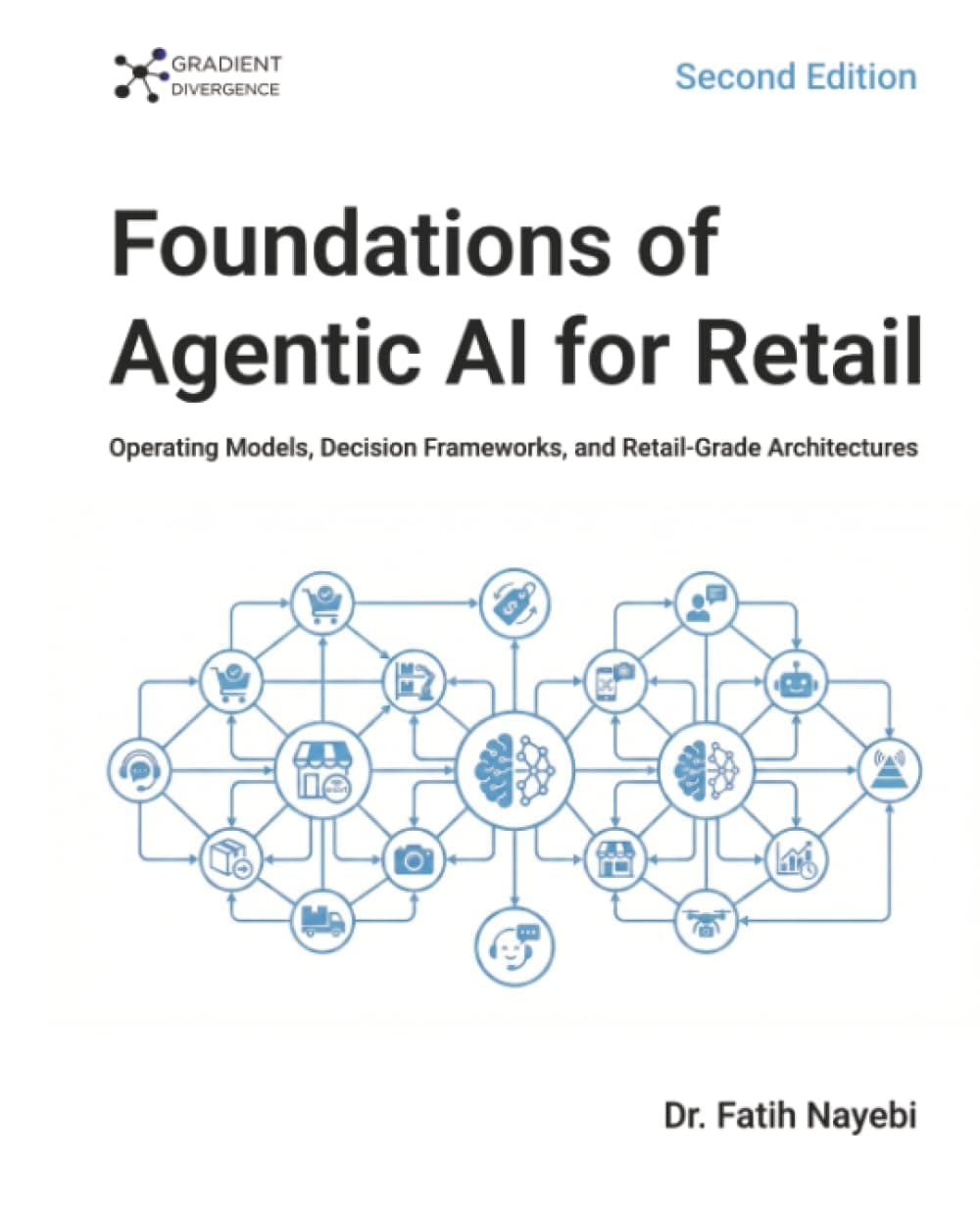
Cover of the second edition of Foundations of Agentic AI for Retail
Operating Models, Decision Frameworks, and Retail-Grade Architectures

What the book covers

The book introduces the BDI (Belief-Desire-Intention) framework and the OODARIS loop for retail AI: Observe, Orient, Decide, Act, Reflect, Iterate, Serve. It covers the theory and how to put it into practice.

The OODARIS loop

OODARIS builds on the OODA loop. Observe, Orient, Decide and Act think fast and act. Reflect, Iterate and Serve think slow: they compare what was predicted with what happened, adjust, and serve the new version back to your systems, which feeds the next Observe. The tag on each step names the product's job there.

OODA: think fast, then act

  1. 01In the product: MonitorObserveWatch sales, inventory and trends as they change.
  2. 02In the product: UnderstandOrientRead the context and find the opportunity.
  3. 03In the product: RecommendDecideChoose the best action for the goal.
  4. 04In the product: Coordinate · ExecuteActCarry out the decision. By default, its owner approves it first.

RIS: think slow, then learn

  1. 05In the product: Simulate · LearnReflectCompare what was decided and predicted with what actually happened, and simulate the paths not taken.
  2. 06In the product: AdjustIterateAdjust the model and the plan where reflection found a gap.
  3. 07In the product: PublishServeServe the new version to the systems and APIs that use it.

Serve feeds the next Observe.

BDI architecture

How AI agents form beliefs, set desires, and execute intentions in retail contexts.

Multi-agent coordination

Patterns for agents that work together across retail operations.

See OODARIS work through one of your decisions.

A demo takes one decision your team makes every week and follows it from the first signal to the approved change.

What happens next

  1. A reply within 24 hours

    A person on the OODARIS team reads your note and writes back to set up a first call.

  2. The first call

    We map the decision's data, handoffs and approvals, and show how OODARIS would work through it.

  3. A pilot, if it fits

    8–12 weeks to a first live cycle, run on your data with your approvals.